The Game-Changer: How Maharashtra is Leveling the Playing Field for Animal Husbandry
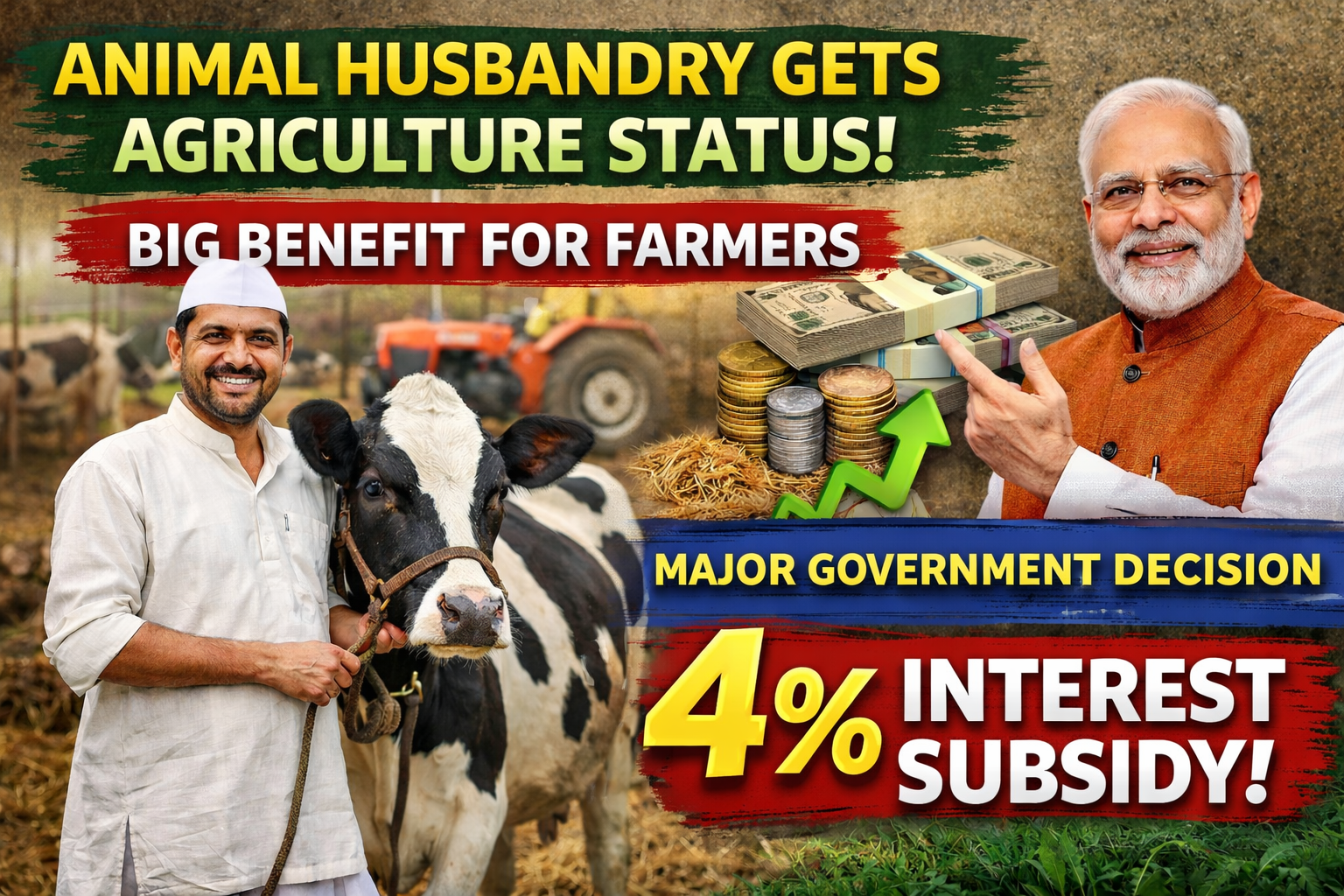
For years, a stark economic disparity has defined Maharashtra’s rural landscape. While traditional crop farming enjoyed significant state support, the animal husbandry sector—the backbone of many rural households—was burdened by “industrial” overheads. Producers of poultry, dairy, and small ruminants faced higher electricity rates, a lack of solar energy subsidies, and steeper Gram Panchayat taxes compared to their counterparts in crop cultivation. Perhaps most critically, they were forced to navigate much higher interest rates on loans. However, a landmark Government Resolution (GR) issued by the Maharashtra Government has officially granted the sector “Agriculture Equivalent Status.” This is more than a policy tweak; it is a milestone decision that recognizes livestock rearing as a core agricultural activity, effectively leveling the playing field for the state’s pashupalaks (livestock farmers).
Takeaway 1: Achieving “Agriculture Equivalent Status”
The cornerstone of this resolution is the formal transition of animal husbandry to “Agriculture Equivalent Status.” This designation is designed to bridge the structural gap between crop farming and livestock rearing by aligning operational costs. Under this status, animal husbandry projects are now eligible for the same electricity tariffs, solar energy incentives, and tax structures—specifically Gram Panchayat taxes—that were previously reserved for traditional agriculture.
Analysis: This represents a profound psychological and economic shift. By stripping away the “commercial” cost barriers, the state is signaling that animal husbandry is no longer a secondary “allied” activity but a primary economic engine. This shift encourages pashupalaks to move toward modern technology adoption and “group farming” models, allowing them to scale with the same fiscal protections as traditional farmers.
Takeaway 2: The Road to a $1 Trillion Economy
This policy is not an isolated welfare measure; it is a strategic maneuver within Maharashtra’s broader roadmap to reach a $1 trillion economy by 2028. Based on recommendations from the Maharashtra Economic Advisory Council and a 2021 NITI Aayog report, the government has identified the livestock sector as a high-growth driver essential for boosting the Gross State Domestic Product (GSDP).
The rationale for this elevation is captured in the government’s preamble:
“The Maharashtra Economic Advisory Council, in its roadmap to reach a $1 trillion economy by 2028, has identified 8 key growth-driving factors, within which ‘Agriculture and Allied’ sectors are prominently included. Additionally, NITI Aayog’s 2021 report recommended measures to increase the contribution of the animal husbandry sector to the national and state gross product.”
Takeaway 3: The 4% Interest Subvention (The Financial Win)
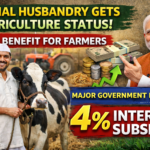
The most immediate financial impact for pashupalaks is the introduction of a 4% interest rate discount (subvention) on short-term working capital loans (खेळत्या भाडंवलावरील). Modeled after the Punjabrao Deshmukh interest subvention scheme, this benefit is available to Kisan Credit Card (KCC) holders. Crucially, this benefit applies to loans issued starting from the date of the GR, February 11, 2026.
This discount is applicable across a wide spectrum of financial institutions:
- Nationalized Banks
- Private Banks
- Rural Banks
- State Cooperative Banks
- District Cooperative Banks
Analysis: This relief directly addresses the “higher interest rates” hurdle identified in the source. By specifically targeting short-term credit for working capital, the government is providing the liquidity necessary for day-to-day operations—such as feed and healthcare—without the suffocating weight of high-interest debt.
Takeaway 4: Strict Eligibility and the “Bharat Pashudhan” Mandate
To ensure transparency and prevent the misuse of funds, the government has established three non-negotiable eligibility criteria. These conditions emphasize digital accountability and financial discipline:
- No Dual Benefits: The project holder must not have received benefits from any other government or District Panchayat subsidy schemes for the same project.
- The Digital Mandate: It is mandatory for all livestock within the project to be registered on the National Digital Livestock Mission (NDLM), also known as the “Bharat Pashudhan” portal.
- The One-Year Rule: To remain eligible for the subvention, the entire loan amount must be repaid in full within one year from the date of the first credit draw.
Takeaway 5: Defining the “Small to Mid-Scale” Focus
The scheme is meticulously calibrated to support producers operating at specific scales. By defining maximum animal counts, the government ensures the benefits reach small-scale herders and mid-sized commercial entrepreneurs rather than just large industrial conglomerates:
- Meat Poultry: Up to 25,000 birds.
- Egg-Layers: Up to 50,000 birds.
- Hatcheries: Units with a capacity of 45,000 or fewer.
- Dairy: Up to 100 milch animals.
- Sheep and Goats: Up to 500 animals.
- Pigs: Up to 200 animals.
Takeaway 6: Seamless Coordination for Implementation
To ensure this policy translates into actual bank credits for pashupalaks, the government has established a clear administrative chain of command. The Deputy Commissioner (Animal Husbandry and Dairy Development) of each district will serve as the primary coordinator. Their mandate is to liaise between the producers and the District Deputy Registrar or Assistant Registrar of Cooperative Societies to resolve implementation hurdles and ensure short-term loans are accessible.
Analysis: The appointment of a dedicated coordinator is vital for overcoming the “paper policy” trap. By involving the Registrar’s office directly, the state is creating a mechanism to hold financial institutions accountable, ensuring the 4% subvention actually reaches the farmer’s account.
Conclusion: A New Horizon for Maharashtra’s Pashupalaks
The decision to grant “Agriculture Equivalent Status” to animal husbandry is a transformative step that aligns the sector with the state’s highest strategic goals. By combining tangible financial relief—like the interest subvention on short-term credit—with modern requirements like Bharat Pashudhan registration, Maharashtra is modernizing its rural economy. These changes are designed to boost the sector’s contribution to the GSDP while making livestock rearing a competitive and profitable venture.
As these operational benefits—from lower electricity rates to subsidized credit—become the new standard, one must wonder: how will this “Agriculture Equivalent Status” fundamentally reshape the landscape of rural entrepreneurship by the 2028 milestone? For the pashupalaks of Maharashtra, the road to the $1 trillion economy has finally been paved.